Custom Shower Tile Installation in Orlando: The Hidden Work
A luxury shower is the hardest tile job in a house, and the parts that decide whether it lasts are the parts you never see once the tile goes on.
Read the article →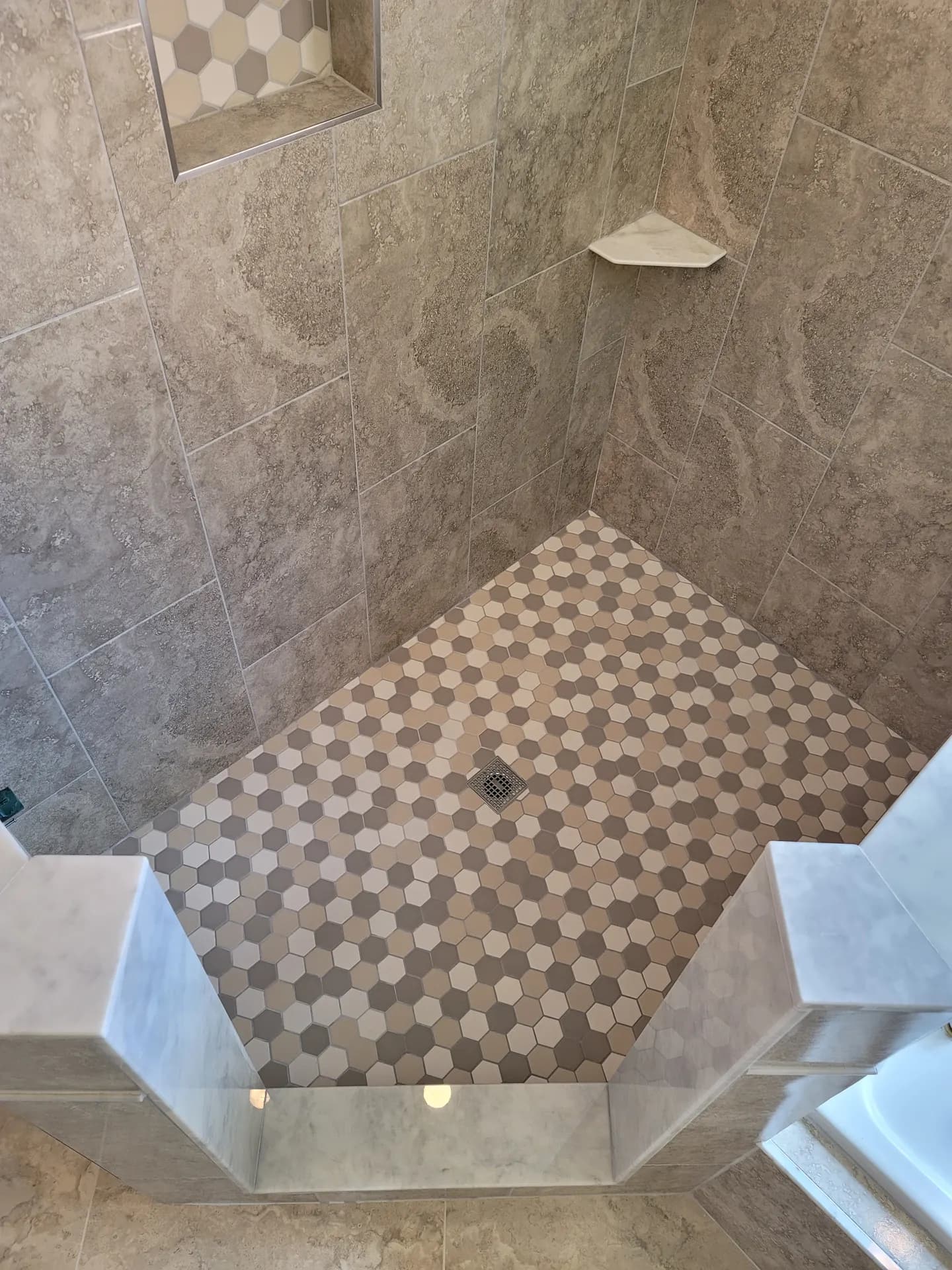
A straight-lay tile floor done well is a good floor. But some rooms call for more, and that is where pattern work earns its keep. Herringbone tile pattern installation is one of the most requested jobs we quote in Orlando, and one of the most misunderstood, because the tile itself is often the cheapest part of the project.
We are Luong Tile, a family-owned installation company with more than 20 years in the trade, licensed and insured. We work in homes across Orlando, Winter Park, Windermere, Lake Nona, and the Horizon West communities. This post covers the patterns we think are worth paying for, why they cost more, and how to judge whether the installer you are talking to can actually pull one off.
Pattern changes how a room reads without changing the material. The same 3x12 porcelain plank laid straight is quiet. Laid in herringbone, it gives the floor direction and movement. In new-build areas like Lake Nona and Horizon West, where whole streets started with the same builder-grade straight lay, a patterned floor or shower is often what separates a house from the one next door. Some patterns solve practical problems too, and we will point those out as we go.
Rectangular tile set in a zigzag, each piece butting the side of the next at 90 degrees. It works in almost any rectangular format: 3x12 planks in a bathroom, 6x36 wood-look porcelain across a main floor, 2x8 handmade-look ceramic on a backsplash. Herringbone reads traditional in a brick-look tile and contemporary in a long marble-look plank, which is why it survives trend cycles.
Best uses: entryways, backsplashes, shower walls, and full floors that need movement. One of our favorite examples in our gallery is a brick-look porcelain herringbone floor on a screened lanai, framed by a straight-lay border. The border is what makes the field read as intentional instead of busy.
Often confused with herringbone, but different. Chevron tiles have angled ends, usually cut at 45 degrees, so the rows meet in continuous points like arrows. The look is cleaner and more modern. The catch: true chevron requires either factory-cut chevron tile or an installer willing to miter every end cut, which roughly doubles the cutting work.
Best uses: feature walls, fireplace surrounds, powder room floors. On a large floor, chevron gets expensive fast. Herringbone gives you most of the effect for meaningfully less labor, and we will tell you when that trade is worth making.
Pairs or triplets of rectangles alternating direction so the surface appears woven, classic in marble with a contrasting dot. It usually comes on mosaic sheets, which keeps labor reasonable. The skill is in hiding the sheet seams; badly set basketweave shows a faint grid of misaligned squares across the whole floor.
Best uses: traditional bathrooms, mudrooms, and renovations of older homes where a vintage floor fits the house.
Standard square tile turned 45 degrees, framed by a straight border course around the room. This is the most affordable way to get a custom look out of ordinary tile, and the angled field disguises walls that are out of square, which is common in older Orlando houses. The border is the hard part: it demands accurate perimeter measurement and clean, consistent cuts where the field dies into the frame.
Best uses: kitchens, dining rooms, and open living areas in homes with long sight lines.
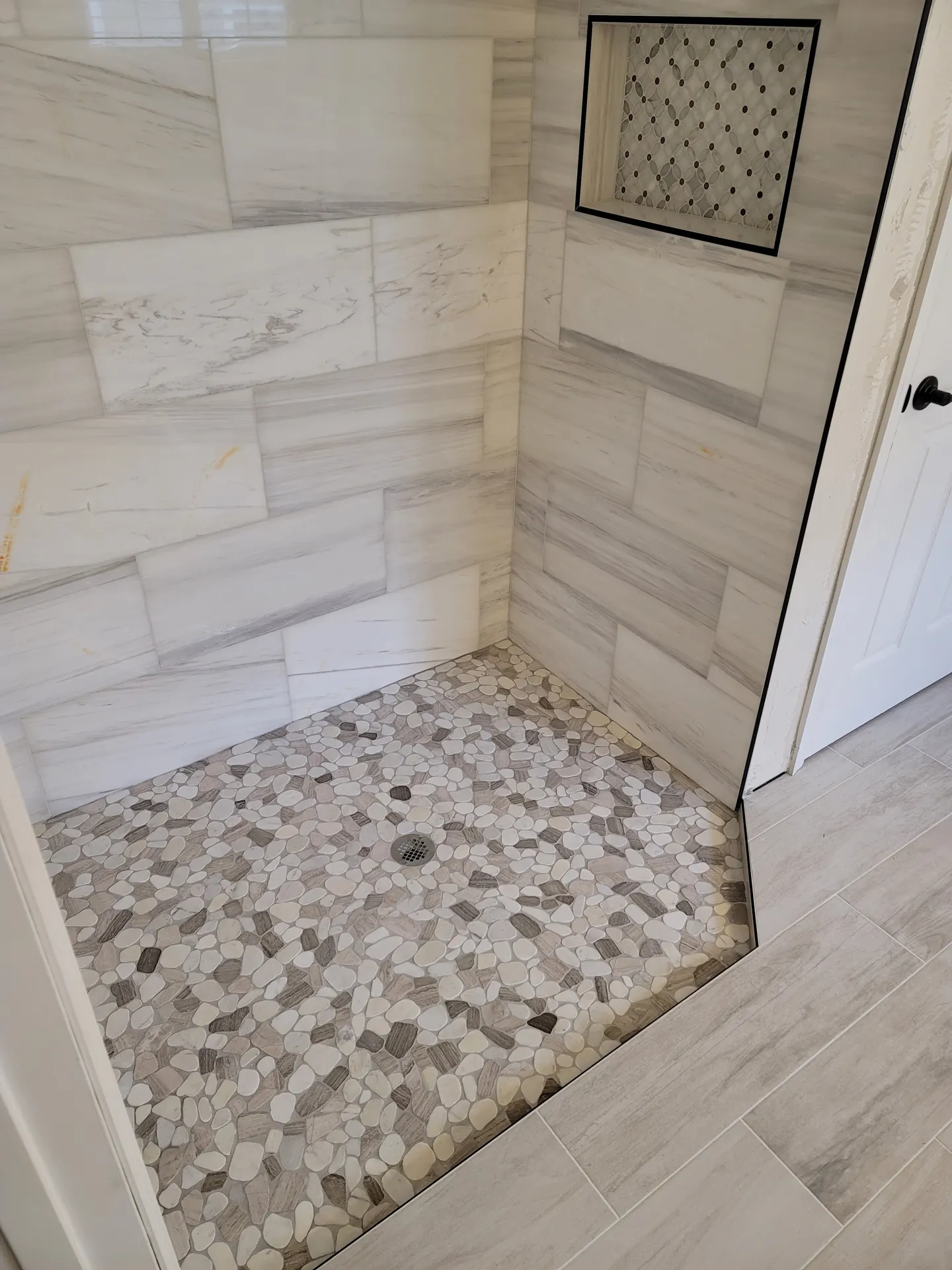
From 1-inch marble hex on a shower floor up to large-format porcelain hex across a laundry room. Small hex is the right answer for shower pans: the tight grout joints add slip resistance and the small pieces follow the slope to the drain in a way large tile never can. Multi-color layouts, like the tri-color hexagon shower pan in our gallery, add a full planning step before installation, because the color placement has to be mapped, not improvised.
Best uses: shower floors, bathroom floors, and accent walls where you want texture at small scale.
We would rather explain the price up front than defend it later. Four things drive it.
A pattern floor is planned twice: once on paper, once on the slab. If your installer skips the first one, you will see it in the second.
In practical terms, expect pattern labor to run roughly 25 to 50 percent above the same tile installed straight. As a loose Orlando reference, if straight-lay porcelain labor is running in the $6 to $10 per square foot range, herringbone on the same tile often lands around $9 to $15, and intricate mosaic work is priced by the job rather than the foot. Every project is different, and we quote each one individually after we see the space.
Anyone can show you a herringbone photo from the internet. Here is what we would ask in your position.
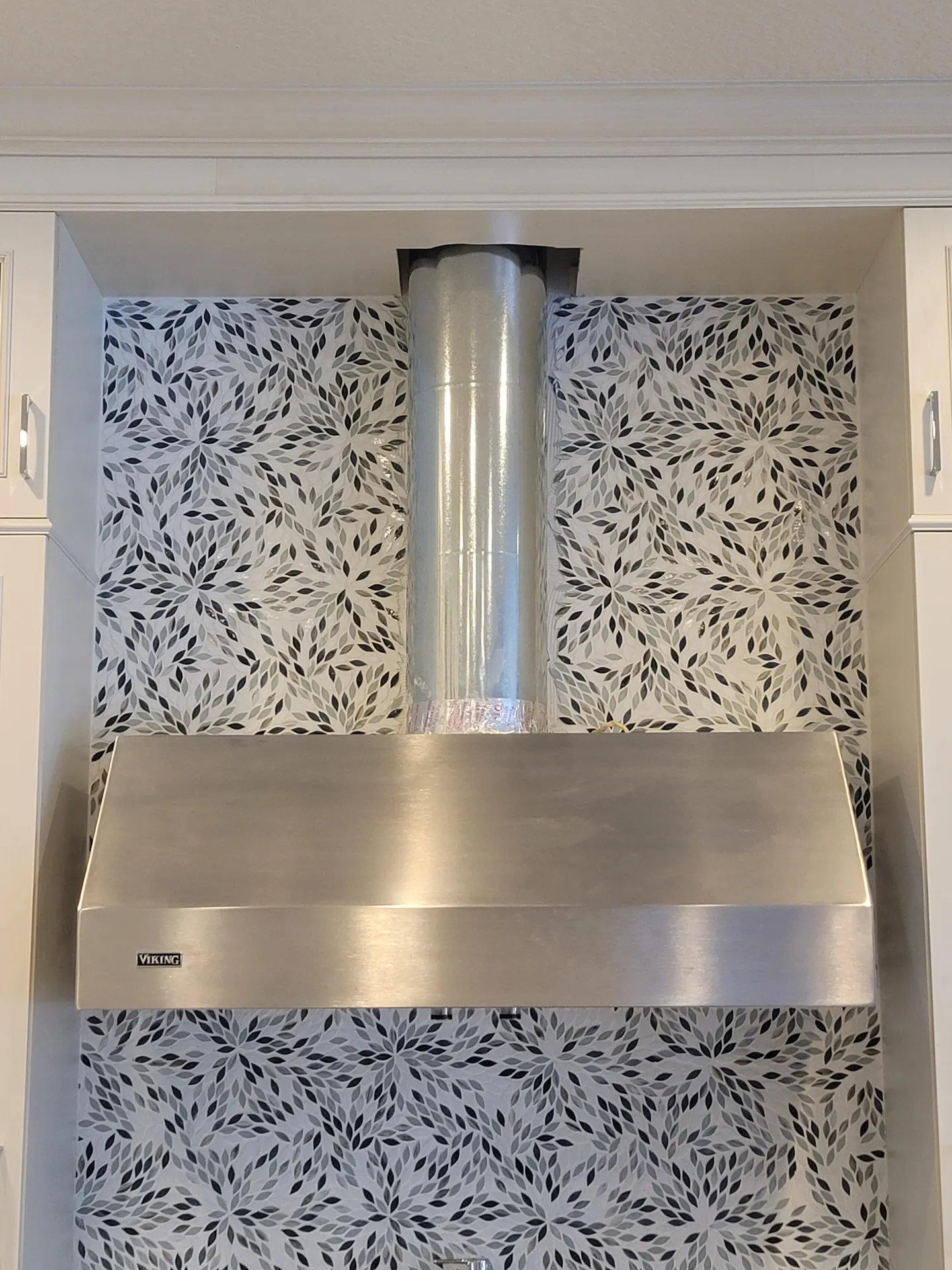
Our gallery includes that herringbone lanai floor, a tri-color hexagon shower pan with a marble-topped curb, and a flower-petal mosaic backsplash set behind a range hood. Those are our own jobs, photographed as we left them, and a fair sample of the standard we hold ourselves to. The full range of floor, shower, and backsplash work we take on is on our services page.
If you are weighing a pattern for a floor, shower, or backsplash anywhere in the Orlando area, call us at 407-538-1155 or reach us through our contact page. We will look at the space, give you an honest number for the pattern you want, and tell you plainly if we think a simpler lay would serve the room better.
Plan on labor roughly 25 to 50 percent above a straight lay of the same tile, plus about 15 percent material overage instead of the usual 10. The extra covers layout time, angled perimeter cuts, and waste. Every job is different, so we quote each one individually after seeing the space.
Herringbone uses standard rectangular tiles set at 90 degrees to each other, while chevron tiles have angled ends so the rows meet in continuous points. Chevron requires factory-cut tile or mitered end cuts on every piece, so it costs more to install. Herringbone delivers a similar effect for less labor.
Order at least 15 percent overage for herringbone or diagonal layouts, compared to about 10 percent for straight lay. Angled cuts at the room's edges leave offcuts too small to reuse. Ordering slightly more up front also protects you from dye lot mismatches if you run short.
Small-format mosaics, such as 1-inch or 2-inch hexagons or pebbles, are the right choice for shower pans. The dense grout joints add slip resistance underfoot, and the small pieces follow the slope to the drain without lippage. Large tile cannot conform to that slope cleanly.
Luong Tile is a family-owned tile and flooring company serving Orlando and Central Florida for over 20 years. Licensed and insured. Call 407-538-1155 for a free estimate.
Keep Reading
A luxury shower is the hardest tile job in a house, and the parts that decide whether it lasts are the parts you never see once the tile goes on.
Read the article →Three bids, thousands of dollars apart, same room and same tile. Here is how to read them, what to ask every installer, and when the low bid is actually fine.
Read the article →Large format tile reads as calm and almost continuous, and it is the least forgiving material in the trade. Here is what actually goes into getting it right.
Read the article →