Custom Flooring in Horizon West: Make Your New Build Yours
Your new Horizon West house looks like every third one on the street. Custom floors are the highest-impact way to make it yours, from plank layout to lanai tile.
Read the article →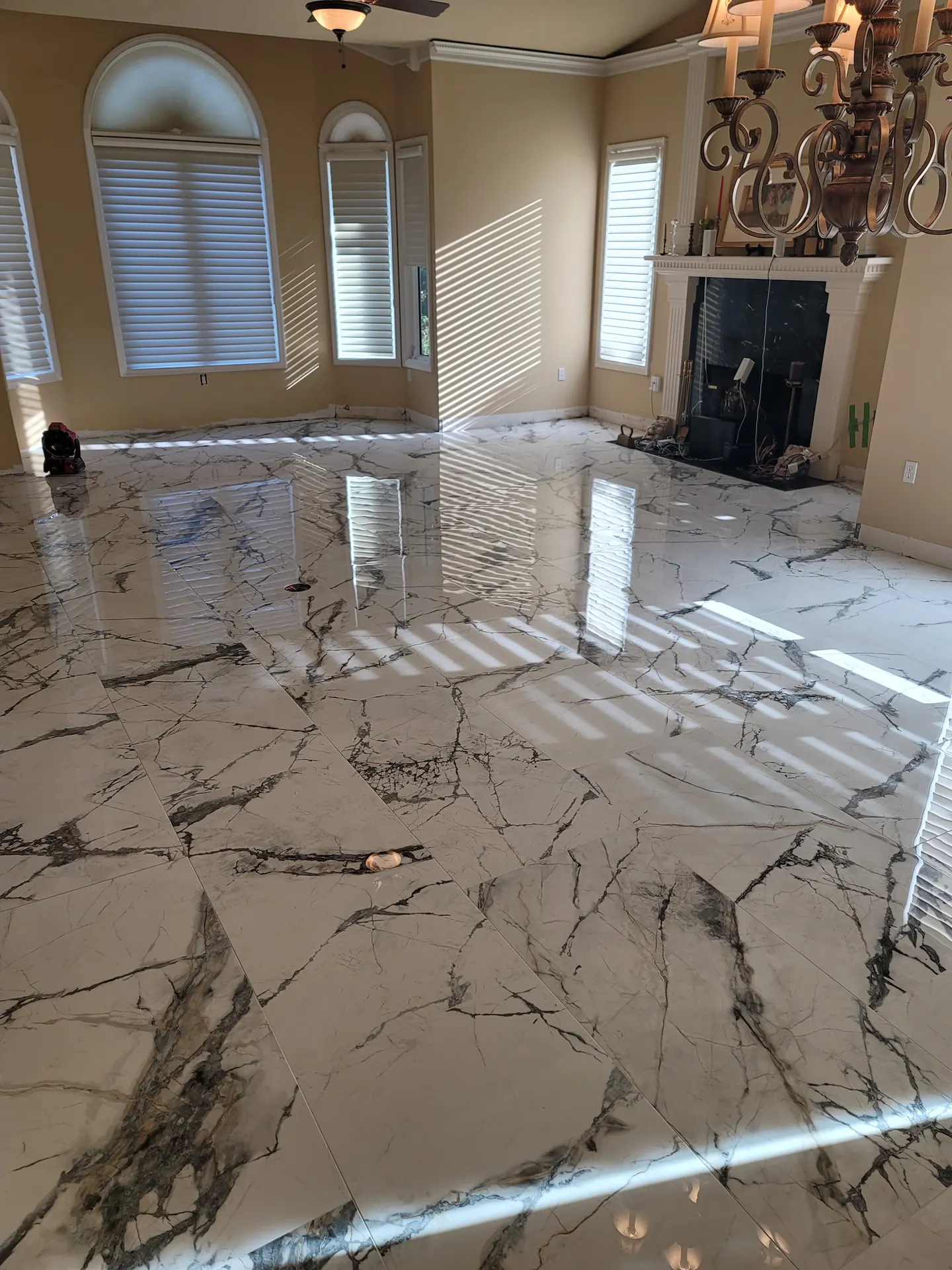
New homes keep going up across Lake Nona, and communities like Laureate Park add more every year. Buyers love the neighborhoods, the schools, and the Medical City jobs nearby. The tile that comes standard in those homes is another story.
We are Luong Tile, a family-owned tile and flooring installation company in Orlando with more than 20 years of experience, licensed and insured. Plenty of our calls come from owners planning a tile upgrade in a Lake Nona new build, often within the first year of ownership. Here is what we tell them.
Builders are not trying to give you a bad floor. They are trying to hit a price point across hundreds of homes, and tile is one of the easiest places to save money. The result is a floor that photographs fine on walkthrough day and starts to bother you six months in.
None of this is a structural emergency. It is a finish level below the rest of the house, and in an open floor plan you see that floor from every room.
Every builder gives you a chance to upgrade at the design center before construction starts. It is convenient. The work happens before you move in, and the cost rolls into your mortgage.
The tradeoffs are real, though. The catalog is limited to what the builder's suppliers stock, so you are choosing from a few dozen tiles instead of the full market. Pricing is typically marked up well above retail, and you cannot shop it around. And the same production crews install the upgraded tile on the same compressed schedule, so the workmanship does not change with the price.
If you love a specific design center option and the number works for you, take it. For most buyers, we think the second window is better value.
Once the home is yours, everything opens up. You can buy any tile on the market: 24x48 large-format porcelain, wood-look planks laid in herringbone, marble mosaics for the bathroom, handmade-look ceramic for the backsplash. You choose your installer, you check their license, insurance, and past work, and you get a written quote you can compare.
The value difference usually comes down to two things. First, materials: buying tile from a local supplier at retail almost always beats design center pricing for a comparable or better tile. Second, workmanship: a dedicated tile contractor spends days on a floor that a production crew finishes in hours, and that difference shows for the next twenty years.
One honest caveat. Good work is not cheap, and we will not pretend ours is. You get what you pay for in this trade more than most. What we can promise is that our price reflects the actual work involved, and the floor gets done right once.
Replacing builder-grade tile is more than swapping one tile for another. A proper job in a Lake Nona new build looks like this:
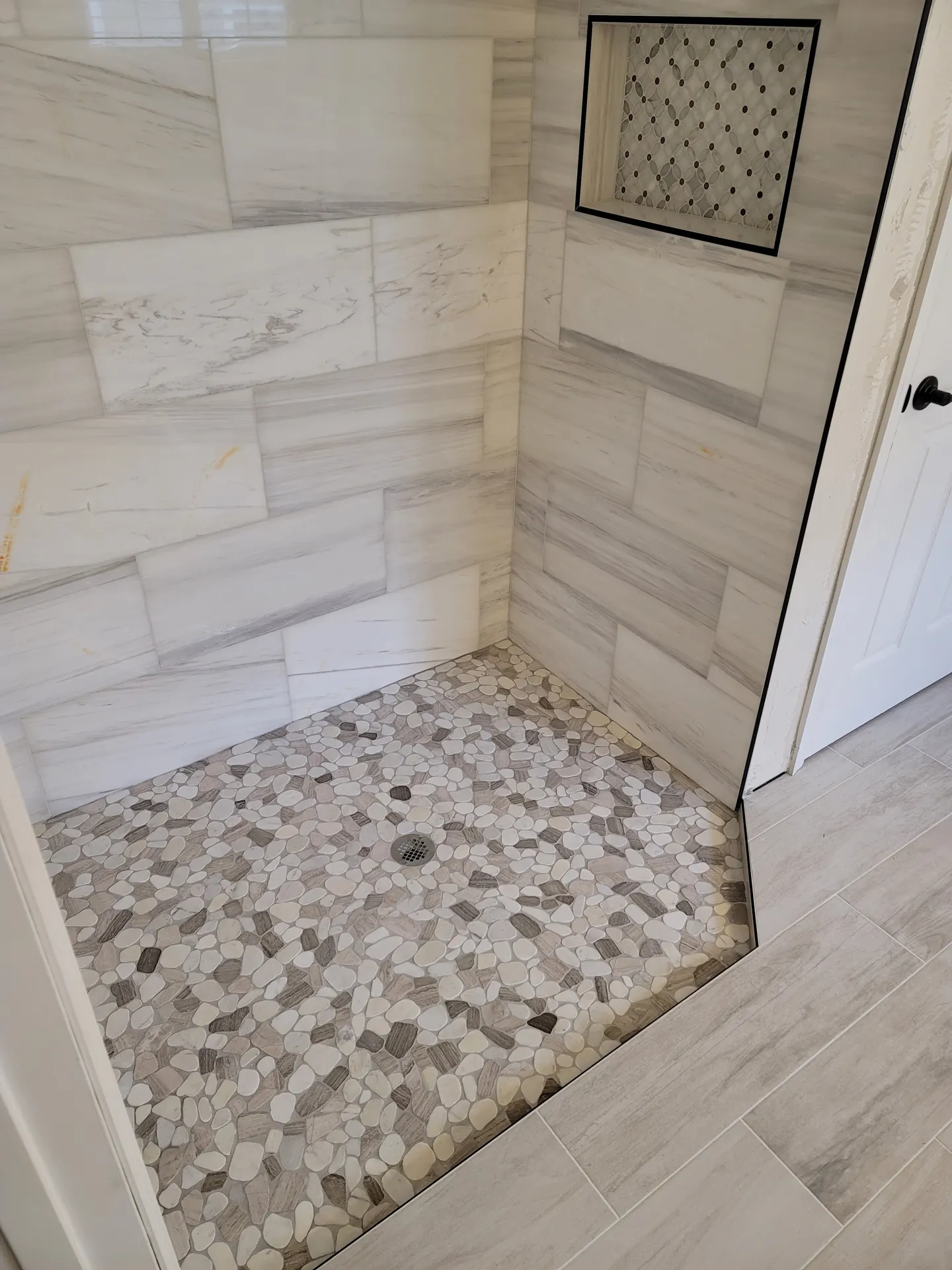
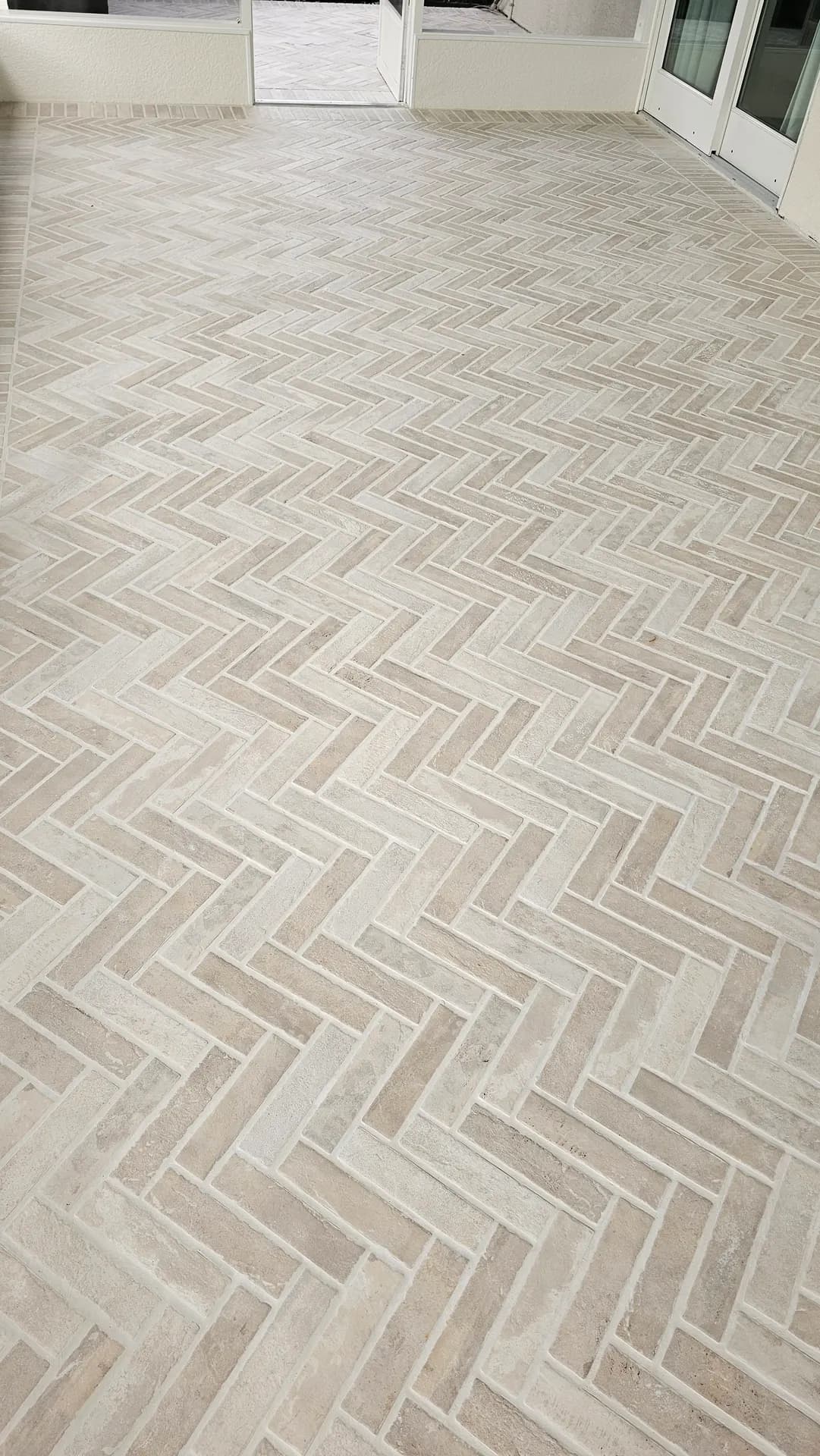
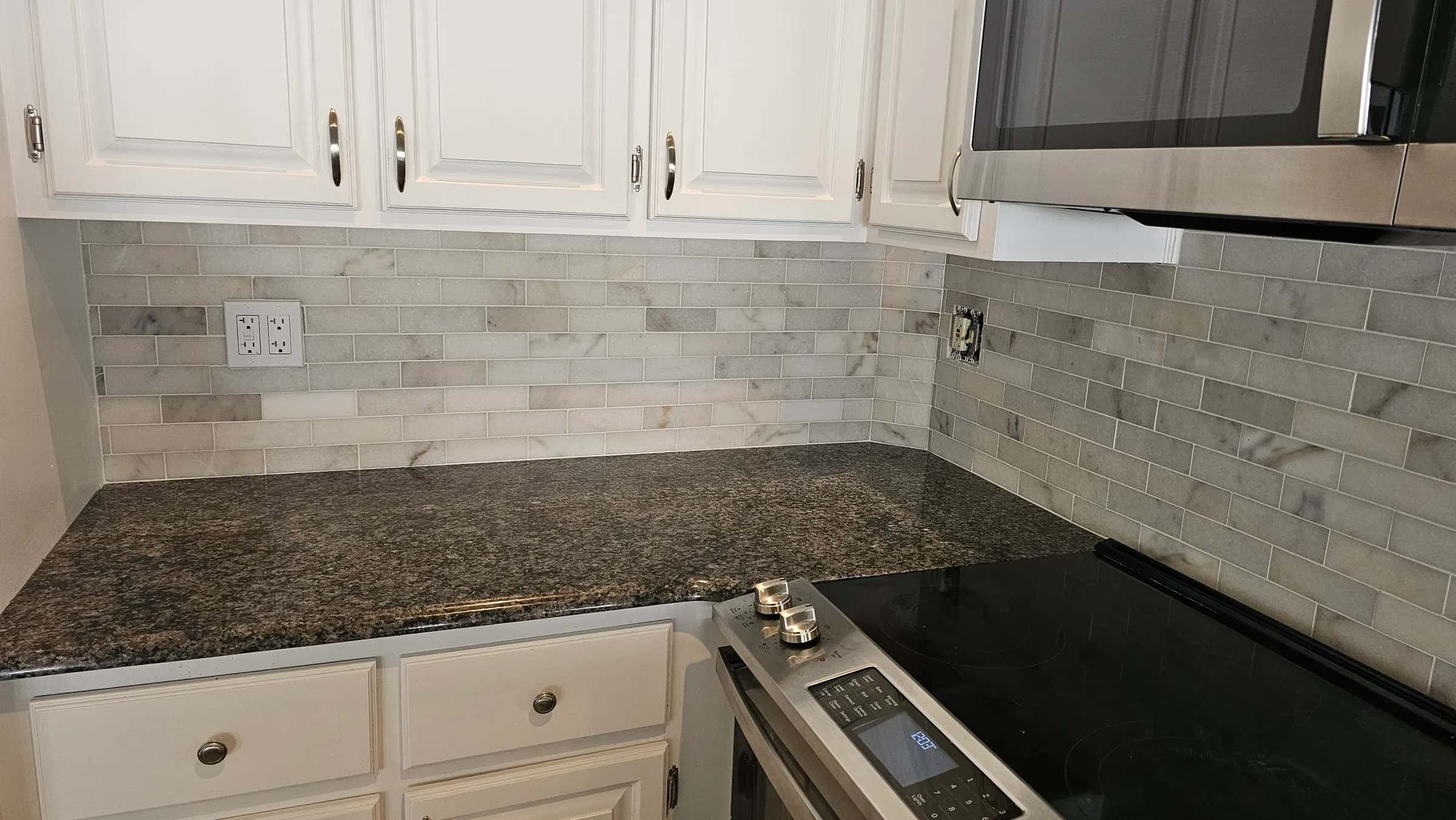
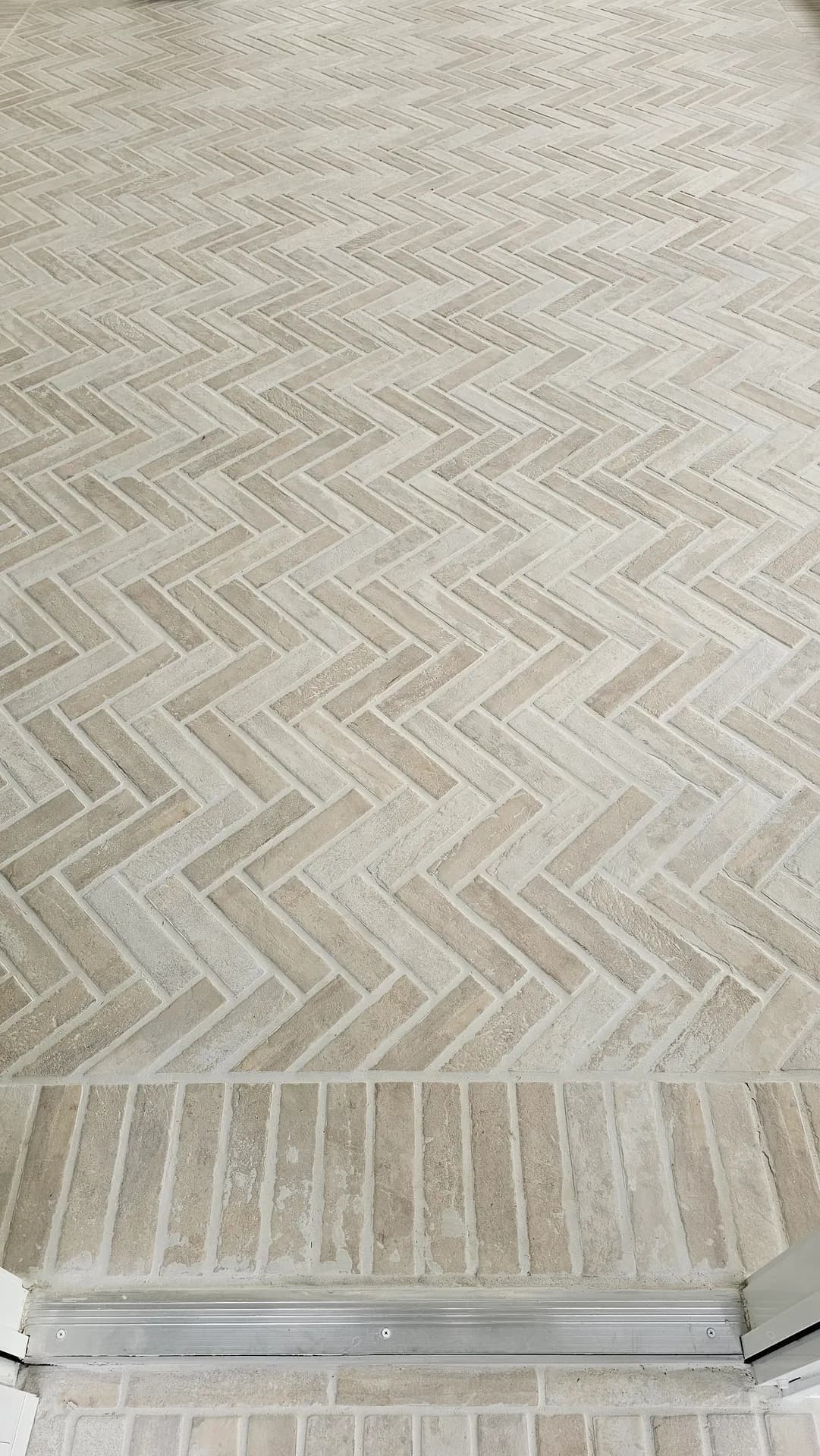
You can see examples of large-format floors, herringbone layouts, and mosaic work in our gallery, and a full list of what we install on our services page.
The best window is the gap between getting your keys and delivering furniture. The house is empty, so there is nothing to move or protect, demolition goes faster, and you are not living in the dust.
As a rough guide, a full first floor of around 1,000 to 1,500 square feet typically takes one to two weeks from demolition to final grout cure, depending on the tile and the pattern. A single bathroom or a backsplash is a matter of days. If you can push your move-in date back even one week, it is worth doing.
Already moved in? Still very doable. We phase the work room by room, contain the dust, and keep part of the house livable throughout. It takes a little longer, but it is common.
Every job is different, and we quote each one individually after seeing the space. Honest ballpark ranges still help with planning. In the Orlando area, removing existing tile generally runs a few dollars per square foot. Installation labor for standard layouts commonly falls between $6 and $12 per square foot, with intricate patterns like herringbone at the higher end. Material is on top of that and varies widely, from budget porcelain at a couple of dollars per square foot to natural stone at many times that.
Compare the full number against your design center quote for the same square footage. In our experience, the after-closing route often delivers a better tile, a better install, or both for similar money.
If you are closing on a new construction home in Lake Nona and the standard tile is not something you want to live with for the next decade, call us at 407-538-1155 or reach us through our contact page. We will look at your floor plan, talk through materials and patterns, and give you a straight quote for doing it right.
After closing is often the better value. Design center catalogs are limited and pricing is typically marked up, while buying tile at retail and hiring your own licensed installer usually gets you a better tile, a better install, or both for similar money. Every job is different, so compare real quotes for the same square footage.
A full first floor of roughly 1,000 to 1,500 square feet typically takes one to two weeks from demolition to final grout cure. A single bathroom or backsplash takes a few days. The ideal window is between closing and furniture delivery, while the house is still empty.
Yes. The work gets phased room by room with dust containment during demolition, so part of the house stays livable throughout. It takes a little longer than working in an empty home, but it is a very common way to do it.
It is usually thin, low-cost porcelain or ceramic in a limited range of colors, installed quickly in a straight lay with basic grout that is often left unsealed. Common results are lippage, hollow spots, and grout that stains within the first year. It is not a structural problem, just a finish level below the rest of the home.

Luong Tile is a family-owned tile and flooring company serving Orlando and Central Florida for over 20 years. Licensed and insured. Call 407-538-1155 for a free estimate.
Keep Reading
Your new Horizon West house looks like every third one on the street. Custom floors are the highest-impact way to make it yours, from plank layout to lanai tile.
Read the article →A luxury shower is the hardest tile job in a house, and the parts that decide whether it lasts are the parts you never see once the tile goes on.
Read the article →In Central Florida the lanai is a room you use most of the year, and the harshest place tile has to live. What we specify for pool decks, and why.
Read the article →