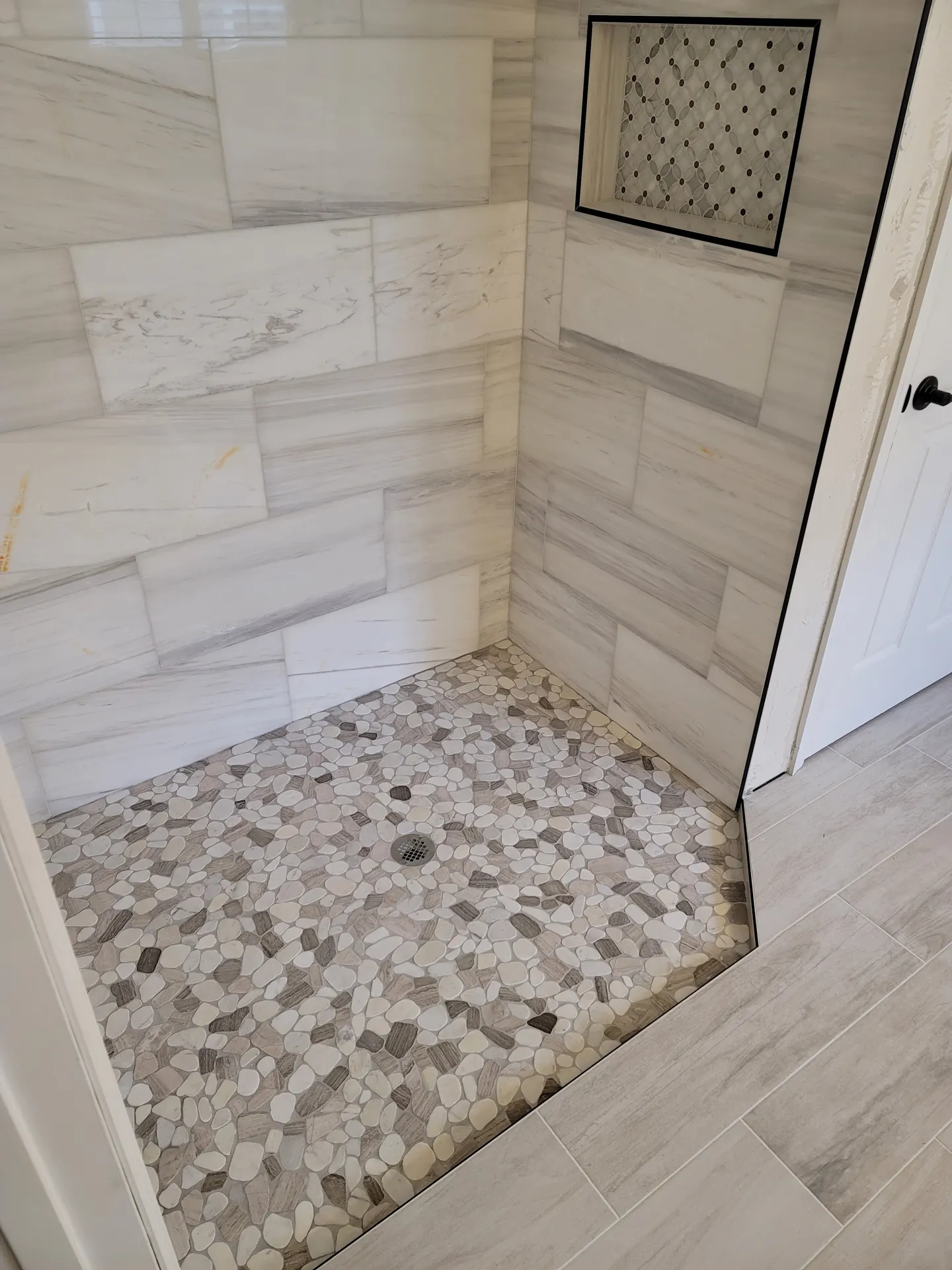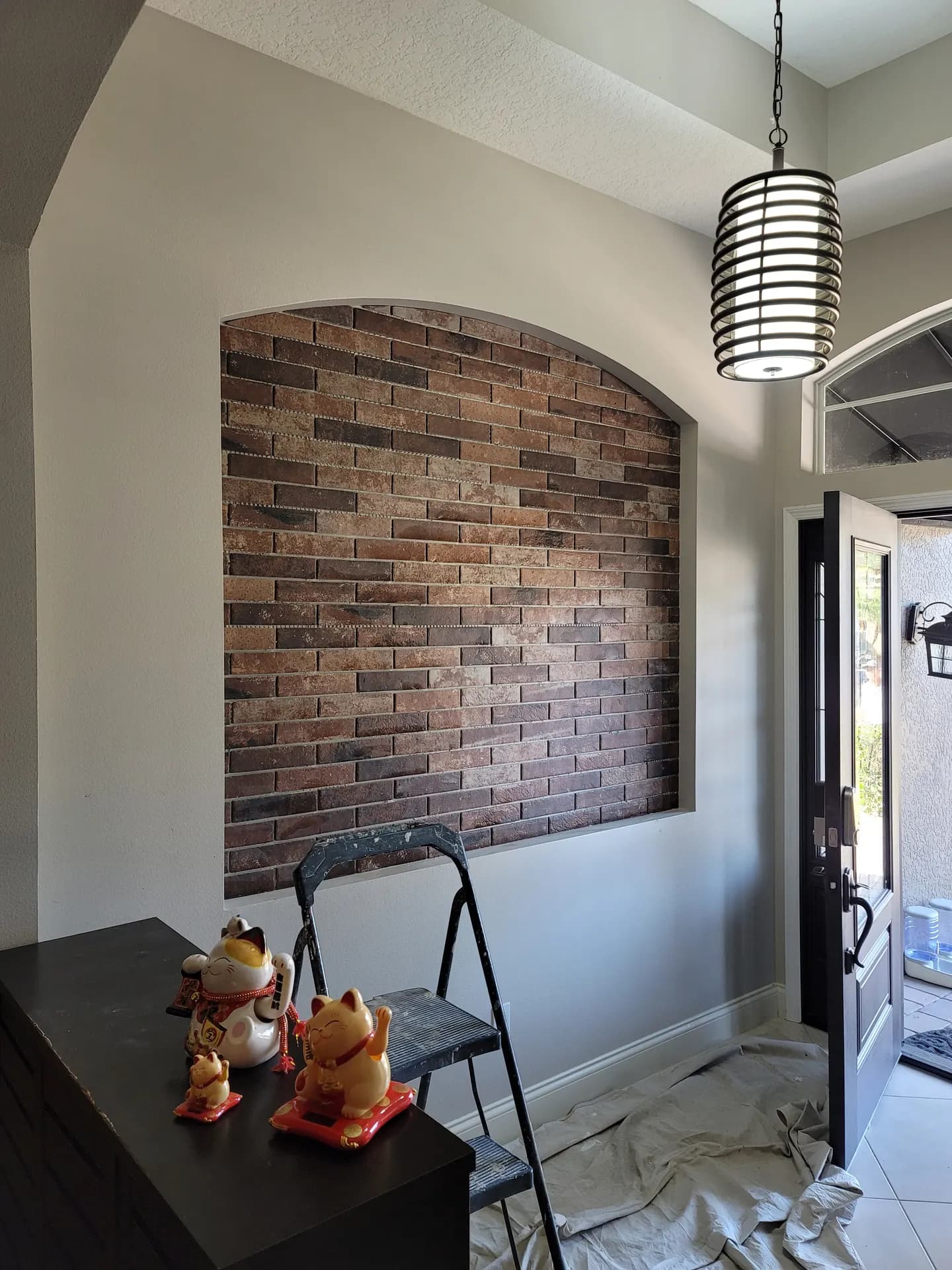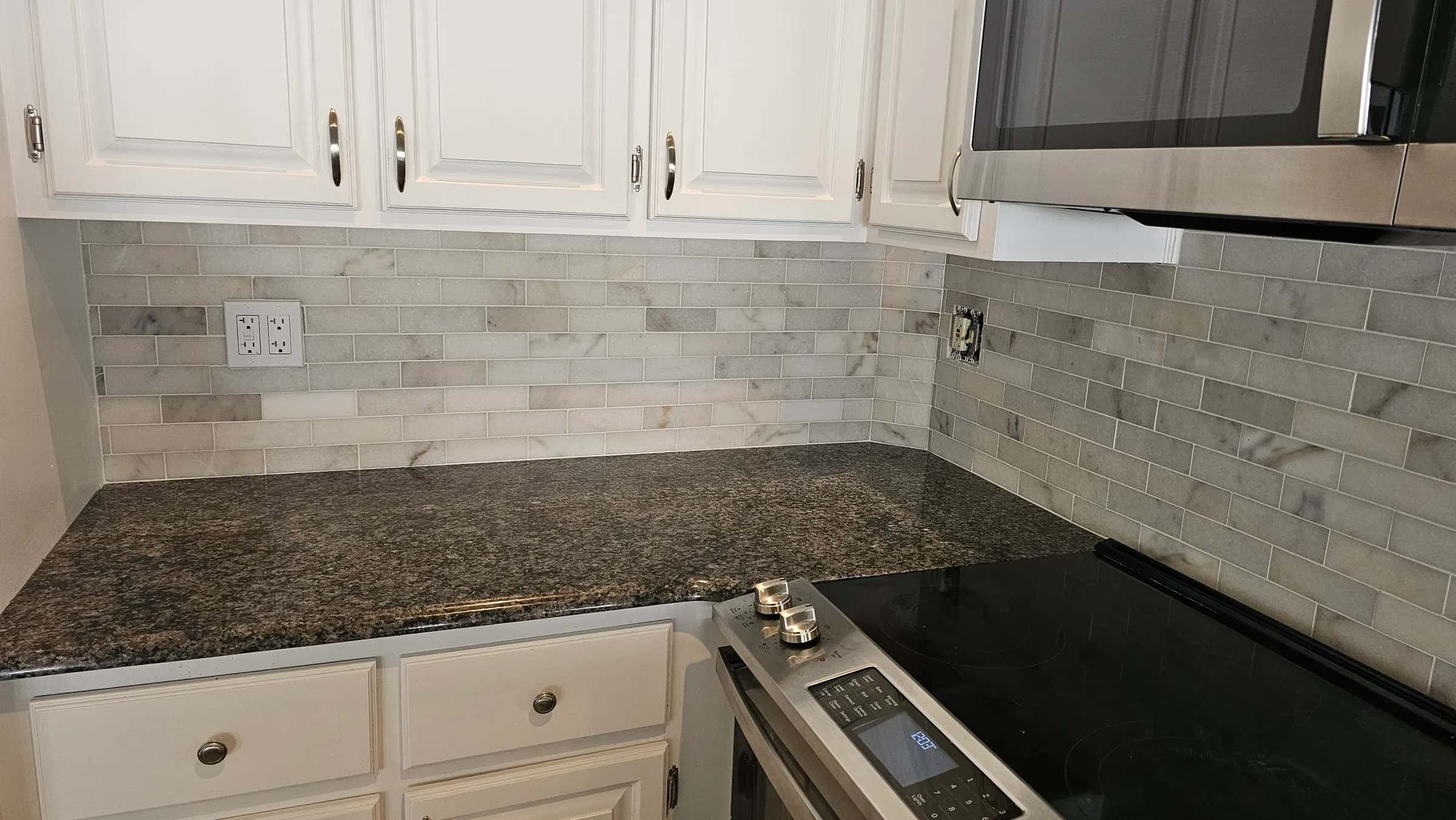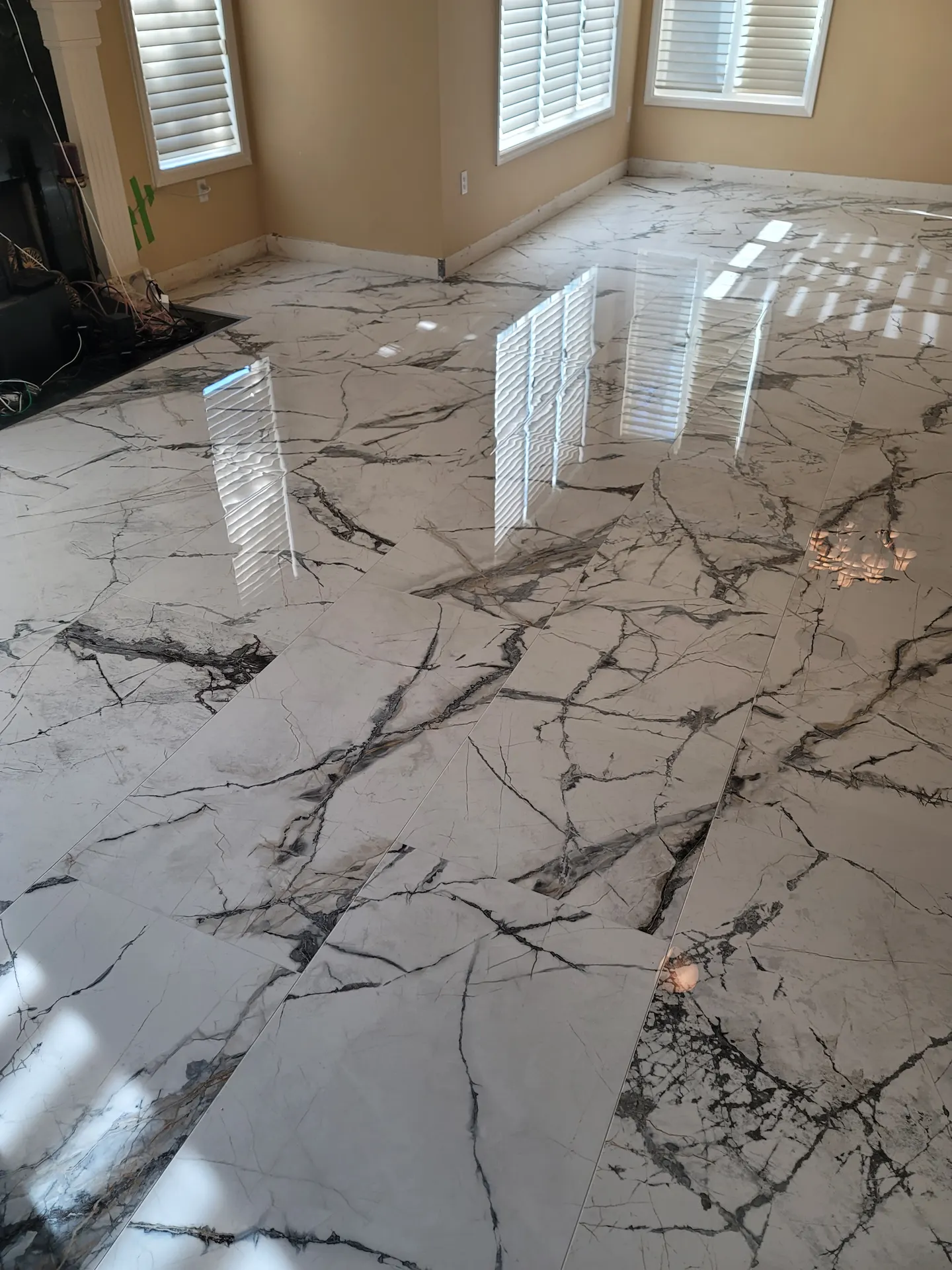
Marble vs Porcelain Tile in Florida: An Installer's Guide
Real marble, travertine, slate, or marble-look porcelain? An honest room-by-room guide from a 20-year Orlando tile installer, with realistic pricing.
Read the article →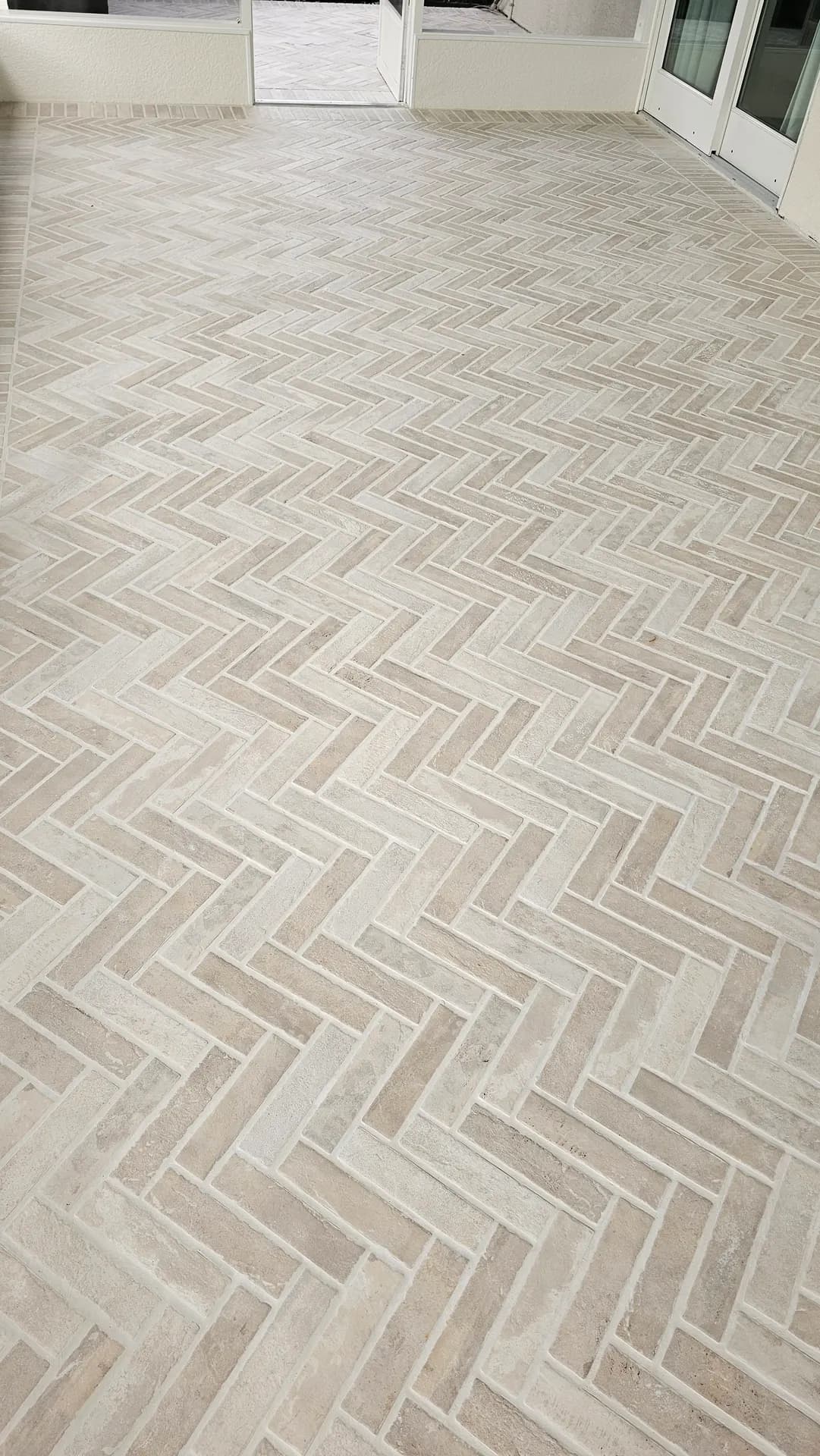
In Central Florida the lanai is not a patio. It is a room. Families in Windermere, Dr. Phillips, Lake Nona, and Horizon West eat, watch games, and cross it barefoot ten months of the year.
It is also the hardest place a floor can live. Outside, tile takes direct sun, afternoon storms, chlorine off wet feet, sprinkler minerals, and a slab that grows and shrinks daily. Nearly every failed pool deck we are called to look at traces back to a product never rated for that.
Tile traction is measured under ANSI A326.3 as dynamic coefficient of friction, or DCOF. The published minimum for a floor walked on while wet is 0.42, and that number is a floor, not a target.
The same standard sets a higher bar for surfaces classified as exterior wet, generally 0.55 and up, and a pool deck is exactly that. DIN 51097 adds a wet barefoot rating of A, B, or C, where B covers pool surrounds and C covers steps into the water. Look for B or C alongside a DCOF above 0.55. These are lab numbers on clean tile: sunscreen and algae film are not in the test.
Every hard surface in full Florida sun gets hot. Color decides how hot: a bone or light greige deck stays walkable on an August afternoon when charcoal does not.
Finish matters too. Polished stone and dense, glassy tile store heat and turn slick the moment they are wet, while matte, textured porcelain grips and sheds heat faster. Porous stone like travertine reads cooler still, one of the few places stone clearly wins outdoors. On an open deck we push light and textured every time.
Our default is porcelain: exterior rated tile over a sound slab, or 2 cm porcelain pavers where we want more mass and impact strength. Ask for through body or color body porcelain, where color runs through the tile instead of a printed top layer, so a chipped corner still matches.
Porcelain absorbs under 0.5 percent water, never needs sealing, ignores chlorine and salt, and holds color under UV. Stone still has a place, and we install plenty of it.
Our material comparison guide goes deeper on how each behaves room by room.
A lanai floor is a drainage plane first and a finish second. The slab should fall away from the house at roughly 1/8 to 1/4 inch per foot. Flatter than that and water sits in low spots and grows algae, a traction problem and a staining problem at once.
We check slope with a long level before quoting, not after demolition. A slab that is dead flat, or pitched back toward the sliders, gets a sloped mortar bed first. Tile cannot fix drainage. It only inherits it.
This is the most common reason exterior tile fails here, and freezing has nothing to do with it. A slab in direct sun swings sixty or seventy degrees between a July afternoon and a January night, and tile and concrete do not move at the same rate.
Industry guidance (TCNA detail EJ171) puts movement joints every twenty to twenty five feet indoors. Outdoors that tightens to every eight to twelve feet in both directions, plus a soft joint around the perimeter and at every column, screen track, and curb. Any control joint in the slab carries straight through the tile, filled with a flexible sealant (ASTM C920) or a preformed profile. Grouting across a slab joint is how a lanai ends up with one long crack.
Interior thinset outdoors is a callback waiting to happen. We use a polymer modified mortar meeting ANSI A118.4, or A118.15 for large and heavy tile. Exterior work asks for about 95 percent mortar coverage against 80 percent for a dry interior floor, so we back butter and never spot bond corners. Voids fill with water, and thermal cycling then breaks the bond. Organic mastic softens when wet and has no business outside at all.
Grout matters too. High performance cementitious grout (ANSI A118.7) handles most covered lanais, while epoxy grout (ANSI A118.3) earns its labor anywhere pool water lands. On a cracked slab, or a balcony over living space, a crack isolation or waterproofing membrane (ANSI A118.10 or A118.12) goes down first.
Freeze and thaw damage kills exterior tile in most of the country. Here it barely registers. Our enemies are different.
Running the indoor floor out through the sliders is the request we hear most. Use the same tile line inside and out with a matte or textured face outdoors. If the interior is polished, pull the matching matte from the same series so color carries through while traction changes at the door. Keep the exterior side slightly lower, with a movement joint at the slider track and grout lines aligned across the threshold.
Screened lanais allow more freedom than open decks, since they stay shaded and drier. Our gallery includes a screened lanai in herringbone brick-look porcelain with a straight-lay border around the perimeter. The border frames the room and absorbs the perimeter cuts. We cover that layout math in our post on herringbone and chevron.
Summer kitchens add one decision: what sits behind the tile. Exterior grade cement board or masonry, never drywall, and dense porcelain where heat and grease land.
These are ballpark labor ranges for the Orlando area, not quotes.
Exterior labor runs above interior labor for the same tile, and that is not padding: the mortar costs more, coverage requirements are higher, and joints and slope take real time. Tile is a separate line, commonly $4 to $9 per square foot for exterior rated porcelain. Our cost guide breaks down what moves those numbers.
Every job is quoted individually after we walk the space, free of charge. If you are planning a pool deck or lanai floor in Central Florida, call us at 407-538-1155 or reach us through our contact page. We are family owned, licensed and insured, with more than twenty years in Orlando area homes.
Start with a wet DCOF of 0.42 under ANSI A326.3, which is the minimum for a floor walked on while wet. For an outdoor deck we want more than the minimum, generally 0.55 and above in the exterior wet classification. A barefoot rating of B or C under DIN 51097 is a good second confirmation.
Travertine stays cooler underfoot and looks classic, but it is porous, wants sealing every year or two, and filled travertine can pit where sprinklers hit it. Through body porcelain and 2 cm porcelain pavers need no sealing, ignore chlorine and salt, and hold color under UV. Porcelain is our default on open decks, with travertine a good choice for owners who accept the maintenance.
Roughly every eight to twelve feet in both directions, which is much tighter than the twenty to twenty five feet used indoors, because a slab in direct Florida sun expands and contracts every day. We also run a soft joint around the perimeter and at every column, screen track, and curb. Any control joint in the slab must carry straight through the tile.
Yes, and it is one of the better looking things you can do to a Florida home. Use the same tile line with a matte or textured face outside for traction, keep the exterior slightly lower for drainage, and align grout lines across the threshold. A movement joint at the slider track is required, not optional.
Luong Tile is a family-owned tile and flooring company serving Orlando and Central Florida for over 20 years. Licensed and insured. Call 407-538-1155 for a free estimate.
Keep Reading
Real marble, travertine, slate, or marble-look porcelain? An honest room-by-room guide from a 20-year Orlando tile installer, with realistic pricing.
Read the article →A luxury shower is the hardest tile job in a house, and the parts that decide whether it lasts are the parts you never see once the tile goes on.
Read the article →Renovating an established Winter Park home is a different discipline from new construction. What we find under old floors, and how we plan tile that suits the house.
Read the article →