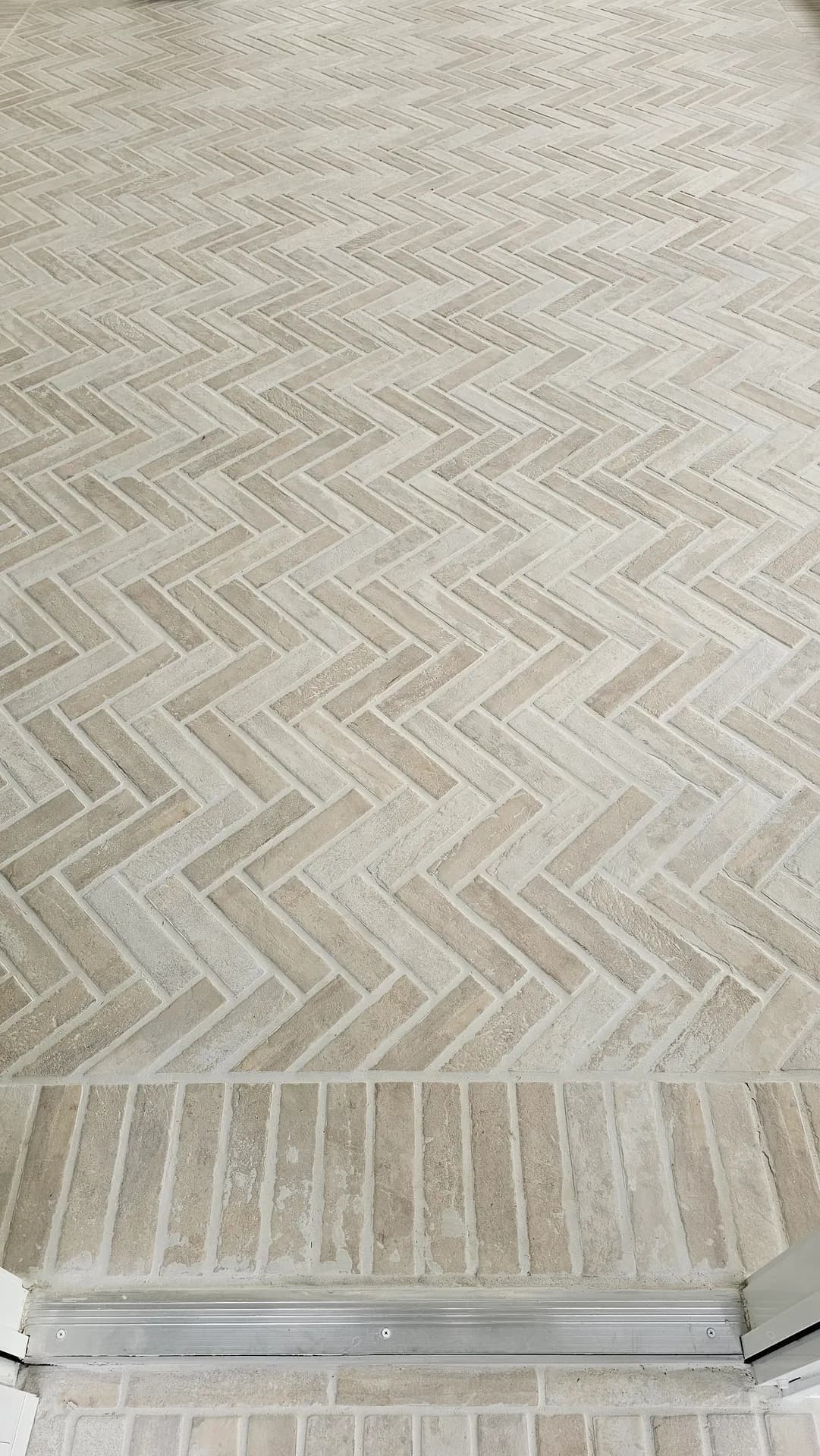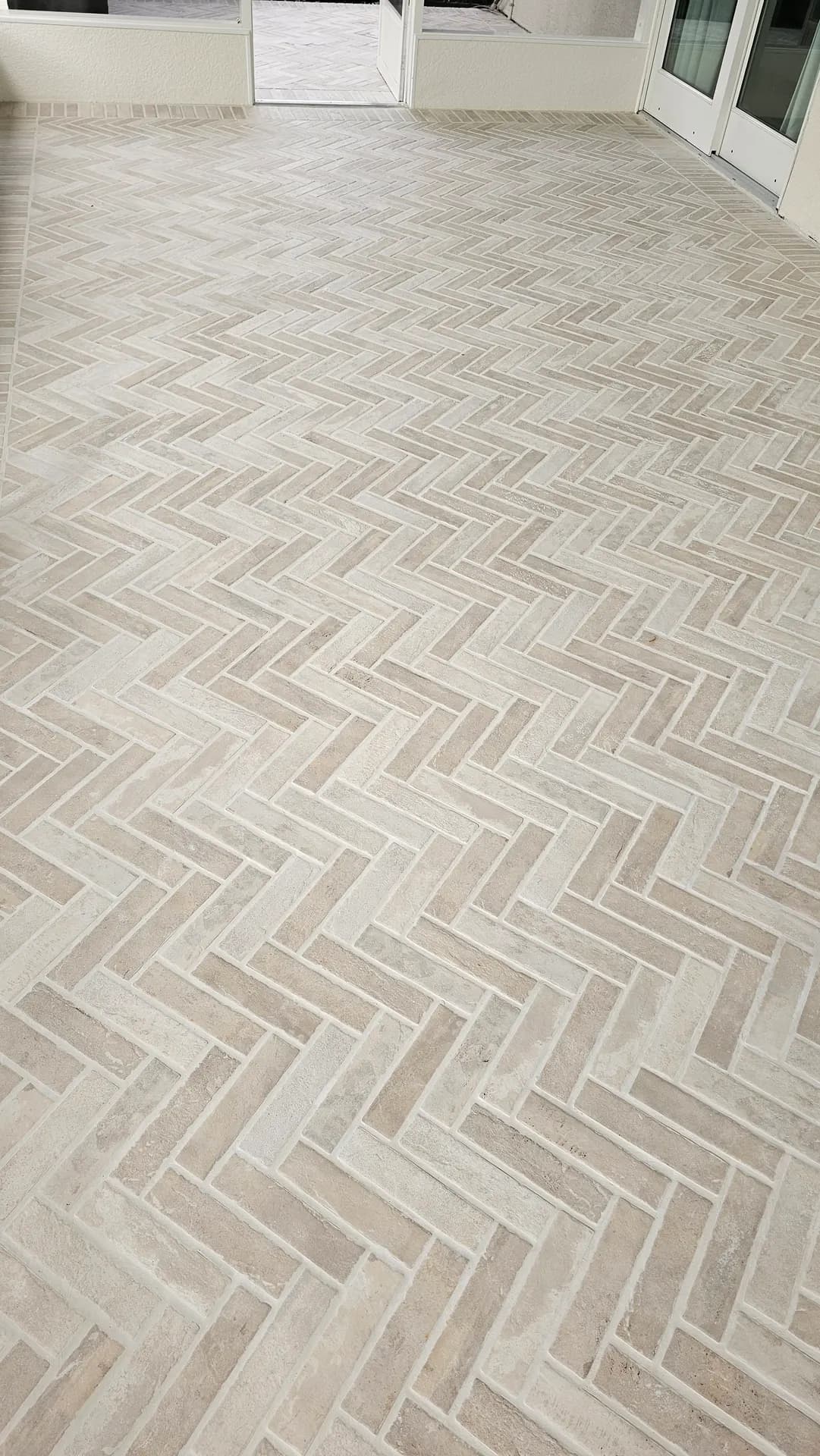
Pool Deck and Lanai Tile in Central Florida: What Lasts
In Central Florida the lanai is a room you use most of the year, and the harshest place tile has to live. What we specify for pool decks, and why.
Read the article →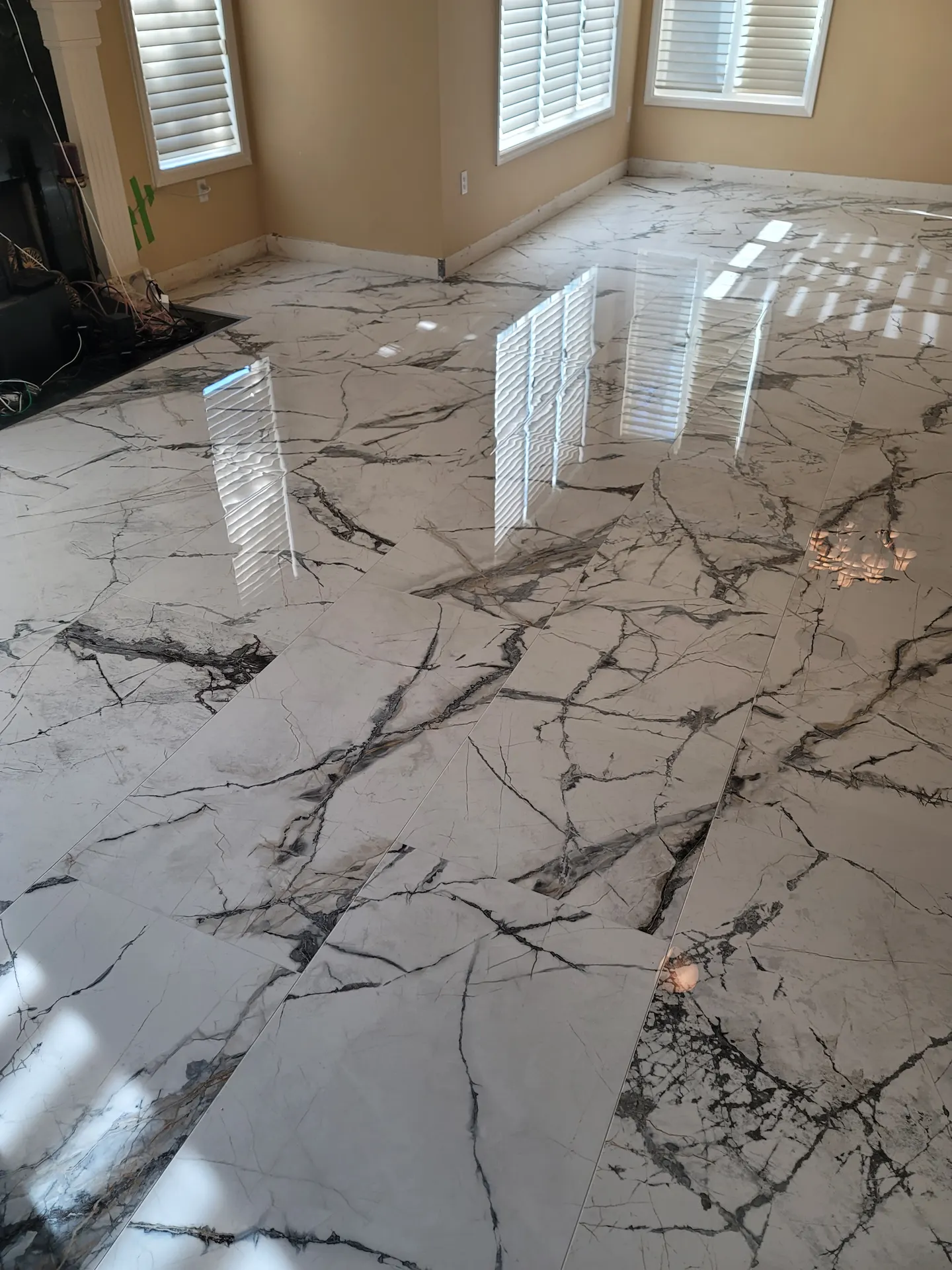
The question we hear most often in high-end Central Florida homes sounds simple: real marble or marble-look porcelain? After more than twenty years installing both across Orlando, Windermere, Winter Park, and Dr. Phillips, we can tell you the honest answer is not one or the other. It is a room-by-room decision, and Florida's climate gets a vote.
This guide covers the four materials we install most in luxury homes here: marble, travertine, slate, and premium porcelain. For each one, we will explain what our heat, humidity, and sand actually do to it, what realistic installed pricing looks like, and where we would put it in our own homes.
Central Florida is hard on flooring in ways that surprise people who move here from up north. Humidity stays high for most of the year, which punishes wood and laminate but barely registers on tile and stone. That is a big part of why hard surfaces dominate our market.
The real enemy is grit. Sand tracks in from yards, ballfields, and beach trips, and underfoot it works like fine sandpaper on a polished surface. Add pool chemistry on the lanai, strong sun through big sliders, and a barefoot lifestyle nine months of the year, and you have a set of demands most national buying guides never mention.
Marble is calcium carbonate, which means acid etches it. Lemon juice, tomato sauce, wine, and many common cleaners will leave dull spots on a polished floor. Sand scratches it. It needs a quality penetrating sealer at installation and roughly once a year after that.
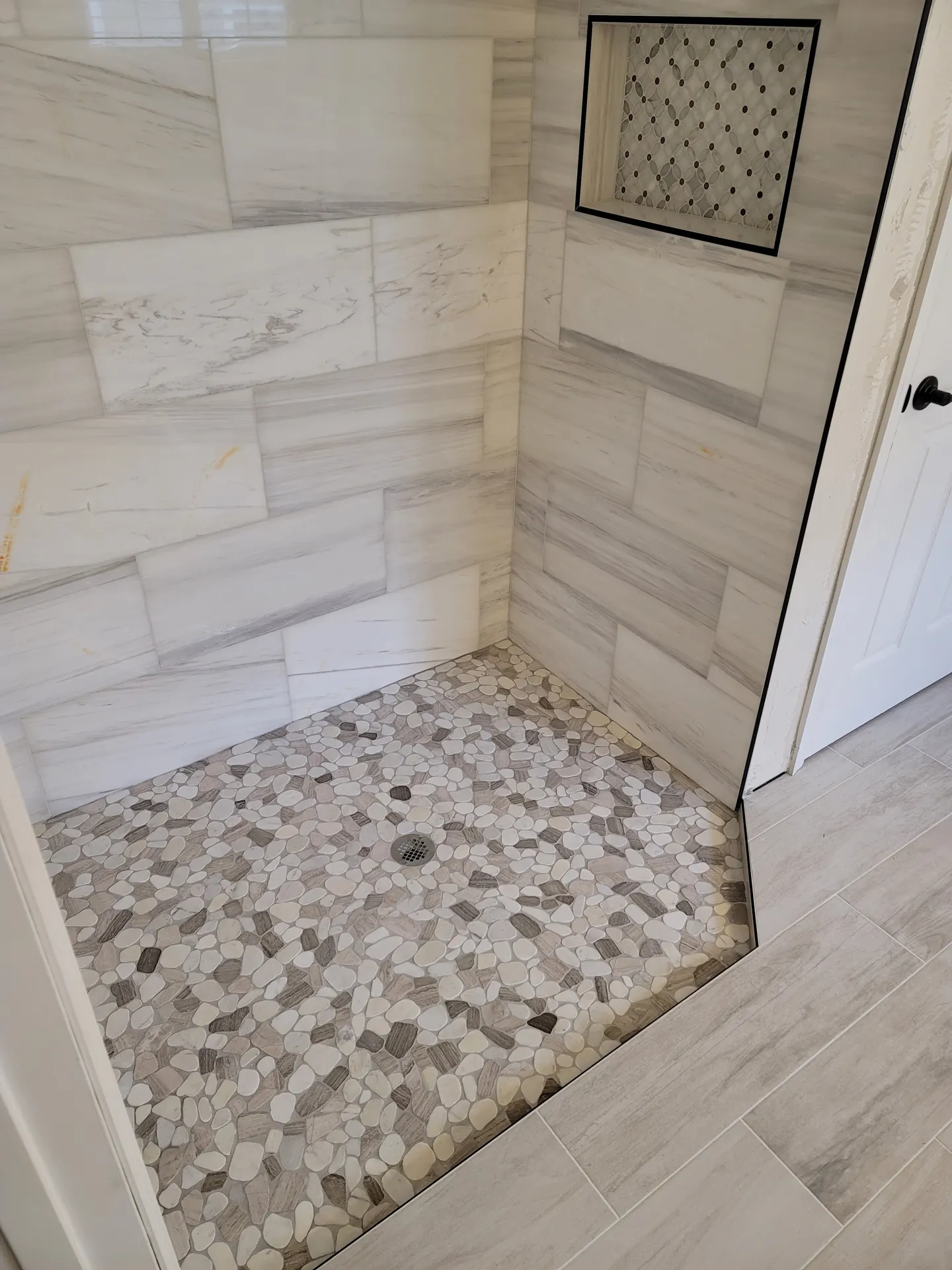
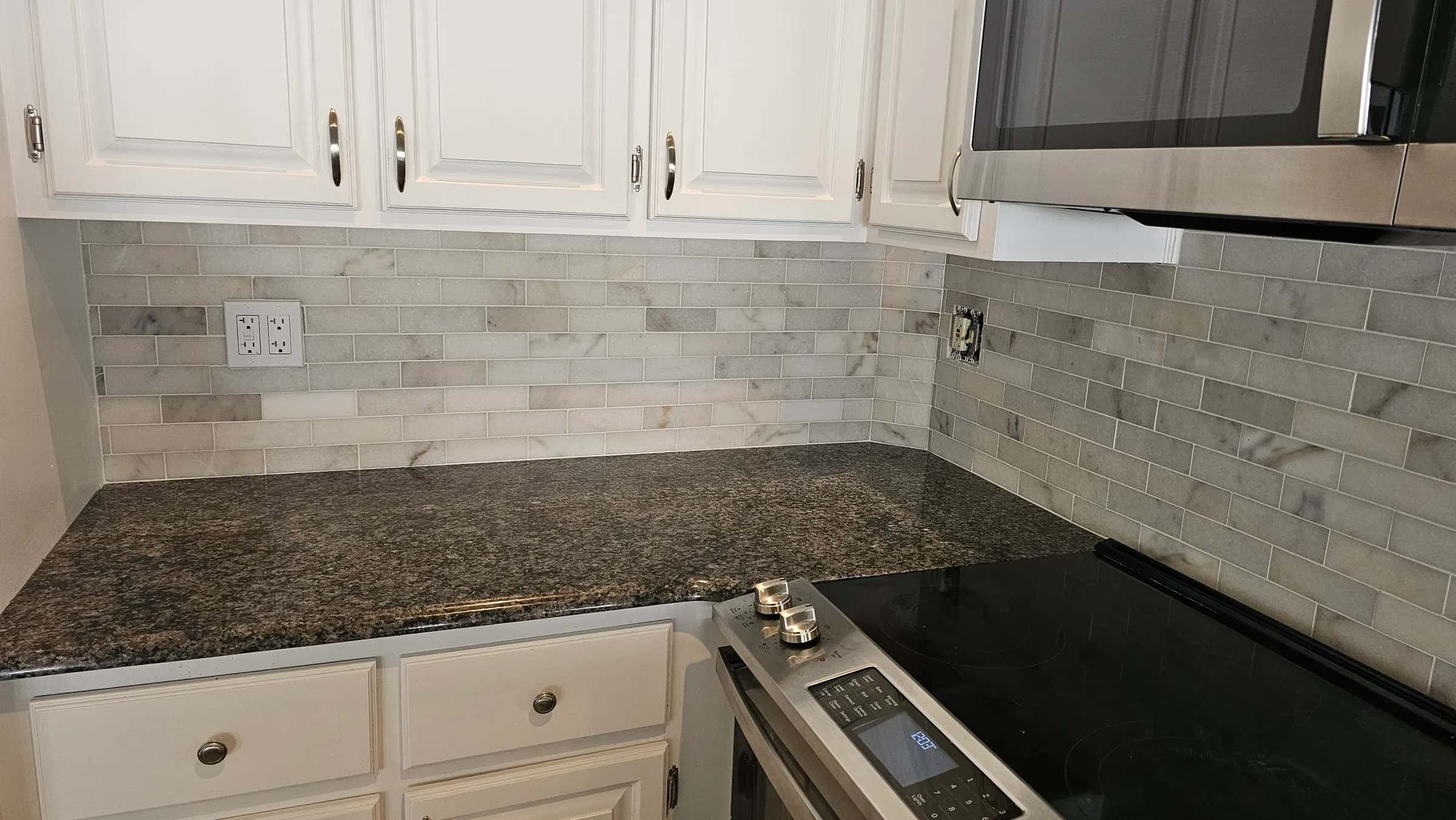
None of that is a reason to avoid marble. It is a reason to place it carefully. A honed finish hides etching and fine scratches far better than a polished one, and 12 by 24 honed marble in a primary bathroom is one of the finest floors we install. Marble also stays cool underfoot, which you will appreciate every August.
Expect material at 15 to 40 dollars per square foot for good stone, with installed totals commonly landing between 30 and 60 dollars per square foot depending on the stone, the pattern, and the prep work.
Travertine has been the default around Central Florida pools for decades, and it earned that spot. Tumbled travertine stays noticeably cooler under bare feet than brick pavers or concrete, and its natural texture grips wet feet well. The classic French pattern, four sizes repeating, works on new construction and older estates alike.
Indoors, filled and honed travertine gives a warmer, softer look than marble. The trade-off is porosity. It needs sealing on a regular schedule, outdoor filler can work loose over time, and acidic spills are just as much of a problem as they are with marble.
Installed pricing usually runs 15 to 30 dollars per square foot, with pool decks and coping quoted separately because the substrate work varies so much from house to house.
Slate's natural cleft surface is one of the most slip-resistant floors you can put down, which makes it a strong choice for mudrooms, entries, and covered lanais. Its dark, layered coloring also hides dirt between cleanings better than anything else on this list.
The caveats matter in Florida. Dark slate gets genuinely hot in full sun, so we do not recommend it for open pool decks. Quality varies widely by quarry, and cheaper slates can flake apart in repeated wet and dry cycles. Buy better stone and that problem mostly disappears. Installed, plan on 15 to 30 dollars per square foot.
Premium porcelain has closed most of the gap with real stone. Current lines print veining in high resolution across large-format tiles, 24 by 48 and larger, with rectified edges that let us set grout joints at a sixteenth of an inch. Some collections offer book-matched veining that reads like slab marble across a floor or shower wall.
The practical case is simple. Porcelain absorbs almost no water, never needs sealing, does not etch, and shrugs off the sand that dulls polished marble. Matte and textured finishes carry wet-area slip ratings that polished stone cannot match, which is why so many of the showers in our gallery use marble-look porcelain on the walls and floor.
The downsides are real too. Budget lines repeat their vein pattern every few tiles, and a trained eye spots it. Cut edges reveal the clay body beneath the printed face. Large-format porcelain is also unforgiving to install: the floor must be flat within tight tolerances, which often means self-leveling underlayment, medium-bed mortar, and careful lippage control. That prep work is exactly what separates our installation service from a rushed builder-grade job.
Installed pricing typically falls between 10 and 25 dollars per square foot, with large-format and book-matched work at the top of that range.
We also see plenty of newer homes where the builder installed basic ceramic and the owner is pricing out a full replacement a few years later. Buying once and buying right costs less than doing it twice.
The ranges above are honest ballparks for the Orlando area, not quotes. Substrate condition, tile size, layout pattern, demolition, and furniture moving all change the number, so we quote every job individually after seeing the space. We would rather give you an accurate figure up front than a low one that grows later.
If you are weighing marble against porcelain for a specific room, call us at 407-538-1155 or reach us through our contact page. We are a family-owned, licensed and insured installer with more than twenty years in Central Florida homes, and we are glad to look at your space and tell you exactly what we would put in it.
No, but placement matters. Humidity does not harm marble; sand and acidic spills do. We recommend honed marble in bathrooms and lighter-traffic formal areas, sealed at installation and roughly once a year after that.
Tumbled travertine is our first choice because it stays cooler under bare feet and grips well when wet. Textured porcelain pavers are a strong second with lower maintenance. We avoid polished surfaces and dark slate on open decks.
Premium lines get very close, with high-resolution veining, large-format sizes, and book-matched patterns. Budget lines repeat their pattern and are easier to spot. Installation quality matters as much as the tile itself: flat floors and tight grout joints sell the effect.
As a ballpark, installed marble-look porcelain typically runs 10 to 25 dollars per square foot, travertine and slate 15 to 30, and real marble 30 to 60. Every job is quoted individually after we see the space.
Luong Tile is a family-owned tile and flooring company serving Orlando and Central Florida for over 20 years. Licensed and insured. Call 407-538-1155 for a free estimate.
Keep Reading
In Central Florida the lanai is a room you use most of the year, and the harshest place tile has to live. What we specify for pool decks, and why.
Read the article →Your new Horizon West house looks like every third one on the street. Custom floors are the highest-impact way to make it yours, from plank layout to lanai tile.
Read the article →A luxury shower is the hardest tile job in a house, and the parts that decide whether it lasts are the parts you never see once the tile goes on.
Read the article →